This page demonstrates that ZT Browser supports the SM2 algorithm and the PQC algorithm for hybrid post-quantum cryptography HTTPS encryption. This uses the SM2DH and MLKEM768 hybrid PQC algorithms, and it also supports the X25519 and MLKEM768 hybrid PQC algorithms. Click here to learn more about post-quantum cryptography HTTPS encryption.
Please download the latest version (v137) of ZT Browser, visit https://sm2pqc.zotrus.com the PQC demo website, the PQC HTTPS icon will be displayed behind the padlock in the address bar, see below figure in the left, indicating that ZT Browser is using the post-quantum cryptography algorithm to achieve HTTPS encryption. Clicking the padlock icon will display "Quantum-Safe" and "Connection is encrypted (SM2)", as shown in the right figure below, indicating that the website deploys an SM2 algorithm SSL certificate, but the key encapsulation uses a post-quantum cryptographic and China Commercial Cryptographic SM2 hybrid algorithm.


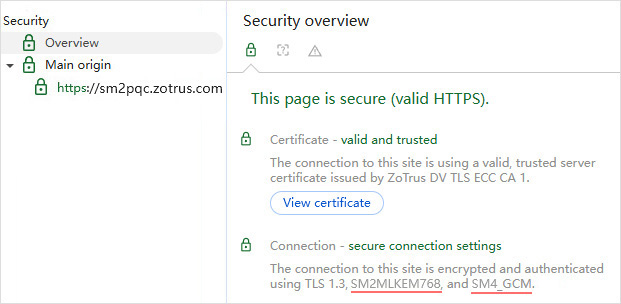
Professional users can also click on "Developer Tools" - "Privacy and security" to check whether ZT Browser is using the post-quantum cryptography hybrid algorithm (SM2DH+MLKEM768) to achieve SM2 PQC HTTPS encryption. If users use Google Chrome "Developer Tools" to view, users can only view the post-quantum cryptographic hybrid encapsulation algorithm (X25519+MLKEM768) because Google Chrome does not support the SM2 algorithm or the Post-Quantum Cryptographic and SM2 Hybrid Algorithm.